


You are here
Bring Your Own Device Toolkit

Overview
Downloadable Resources
| Title | Description | File | ||
|---|---|---|---|---|
|
|
Getting Started with BYOD |
Today’s students are not the same learners that we were. These digital natives have grown up surrounded by computing technology as a natural part of their everyday lives. They live in a multimedia world, they constantly connect and collaborate, and they access information that is live and on-demand through mobile devices. |
|
|
|
|
Planning and Implementation Framework |
Developing a successful BYOD program requires extensive planning, communication, and ongoing evaluation. Although each district is unique, with its own cultures and concerns, a well-defined framework will go a long way in helping a school initiate a BYOD program. |
|
|
|
|
BYOD Implementation Challenges |
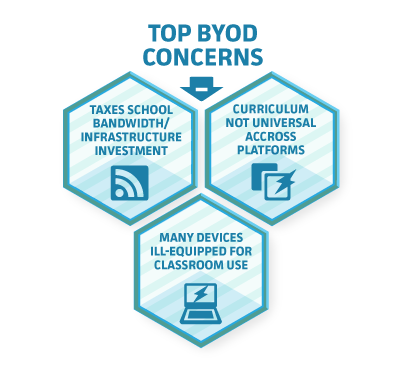
Although there are many benefits to implementing a BYOD program, it is not without its challenges. Consider the attached BYOD challenges and questions. |
|
|
|
|
Mobile Scenarios for K-12 |
This technology taxonomy contains over 30 scenarios that show teachers a range of use of mobile devices in the classroom. The scenarios cover all grade levels and subject areas including language arts, mathematics, social studies, science, and the arts. This taxonomy will also be released as app for both Android* and iOS* devices. |
|
|
|
|
Mobile Learning: the Next Wave of K-12 Education Innovation |
Wireless computers—whether in the form of laptops, tablets, netbooks or other handheld devices—are everywhere. Even if IT doesn’t provide mobile devices, students, faculty and administrative staff are bringing their own tools into the school environment, and they want to know how to use them in an educational environment just like they do at home. |
|
|
|
|
Exemplar BYOD Presentations |
Download and adapt these sample presentations to introduce various audiences to the benefits and challenges of BYOD. |
|
|
|
|
District Readiness Checklist |
Use the attached checklist as a tool for determining your school or district's readiness for BYOD. |
|
|
|
|
Teacher Readiness Checklist |
Before you open your classroom doors to student-owned devices, use the attached checklist to evaluate your readiness. |
|
|
|
|
BYOD Case Study: Forsyth County Schools |
The success of BYOD in Forsyth County Schools is due in large part to its strong network of technology advocates. The district school board and local community are very supportive of instructional technology and have high expectations for its use. |
|
|
|
|
BYOD Case Study: Oak Hills Local SD |
Oak Hills Local School District in Ohio has implemented a successful BYOD program that permits both students and staff to bring in their own devices. The district decided to try BYOD because they believe that using technology in the classroom will help to prepare their high school students for work in the 21st century world. |
|
|
|
|
BYOD: Sample Acceptable Use Policies |
Use these downloadable AUPs as models from which you can adapt and create your own. |
|